
Earlier this year, I purchased the small Harvest Right freeze dryer, hoping to further reduce food waste and make better use of what I grow — and what shows up each week in my CSA bag. When my micro tomatoes (more on them in a later post) produced a flourish of tiny cherry and teardrop gems, I needed a preservation plan. My freezer space is always at a premium, and there weren’t quite enough to justify canning. That’s what ultimately pushed me to invest in a freeze dryer. Alongside the tomatoes, I also had strawberries from a recent sale, plus some lingering celery and apples, ready to use.
The freeze-drying process itself is fascinating. A typical cycle runs anywhere from 20 to 48+ hours. It begins by freezing the food solid. Then a vacuum is created inside the chamber, allowing the frozen water in the produce to sublimate — transitioning directly from ice to vapor. A final drying phase removes any remaining moisture. It sounds technical, but the Harvest Right machine was refreshingly simple to set up and operate. I’ve only used the built in automatic setting and then added additional drying time at the end if it was needed.
My first experiments were with bananas. I made crisp “chips” and powdered some for smoothies — both a success. Next, I ordered chicken hearts and livers through my CSA and freeze-dried them for Pearl. She absolutely loves them, and it feels good knowing exactly what’s in her treats.
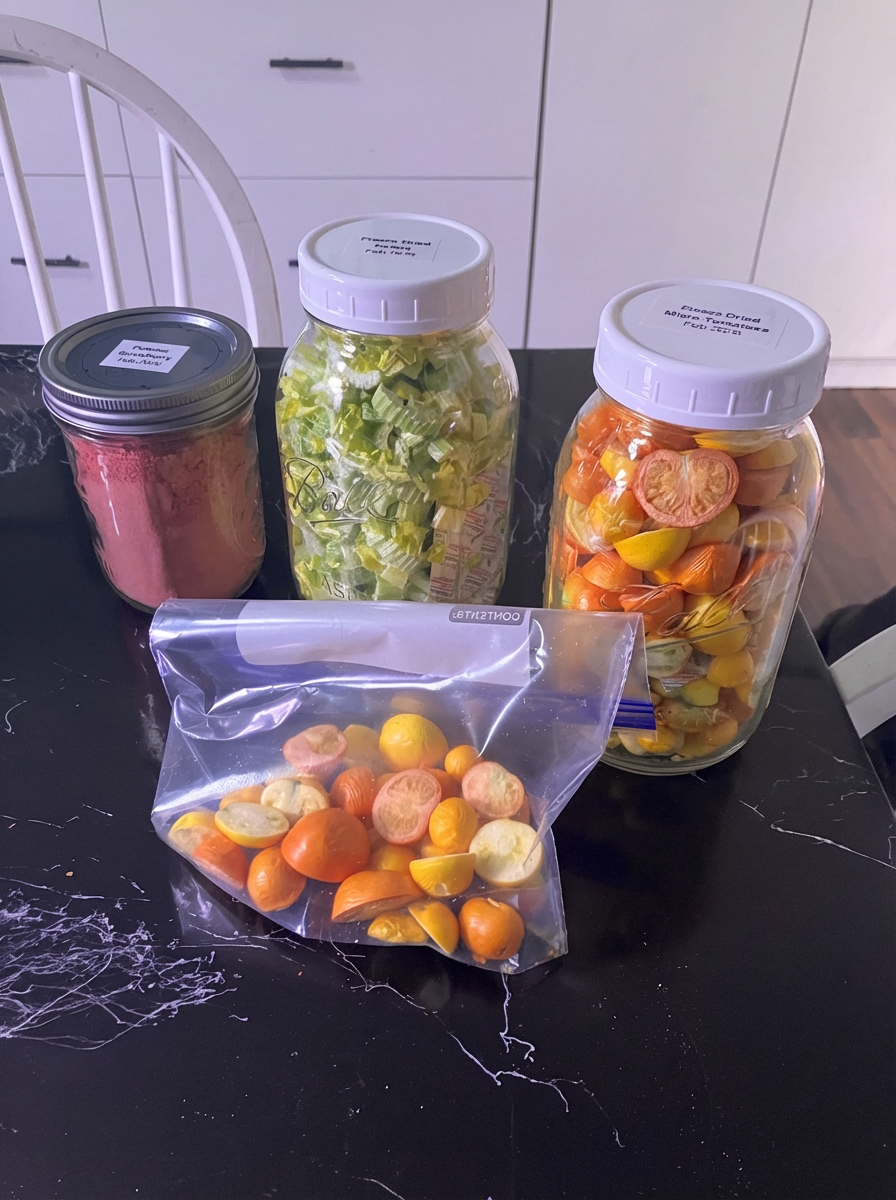
Late last week, I loaded up strawberries, tomatoes, and celery. The strawberries were washed and sliced into ¼- to ½-inch pieces, as were the celery stalks. The micro tomatoes were halved. In total, I filled two trays with strawberries and one tray each with tomatoes and celery. Everything turned out beautifully. The tomatoes stayed tart and intensely flavorful, yet light as air. Interestingly, the yellow tomatoes kept their color, while the red ones turned more orange. The strawberries were delicious — I pulverized them in my bullet blender for cooking and smoothies, and ended up with about 8 ounces of vibrant pink powder. The celery dried completely, feather-light and crisp. I sealed everything in mason jars with oxygen absorbers for long-term storage.
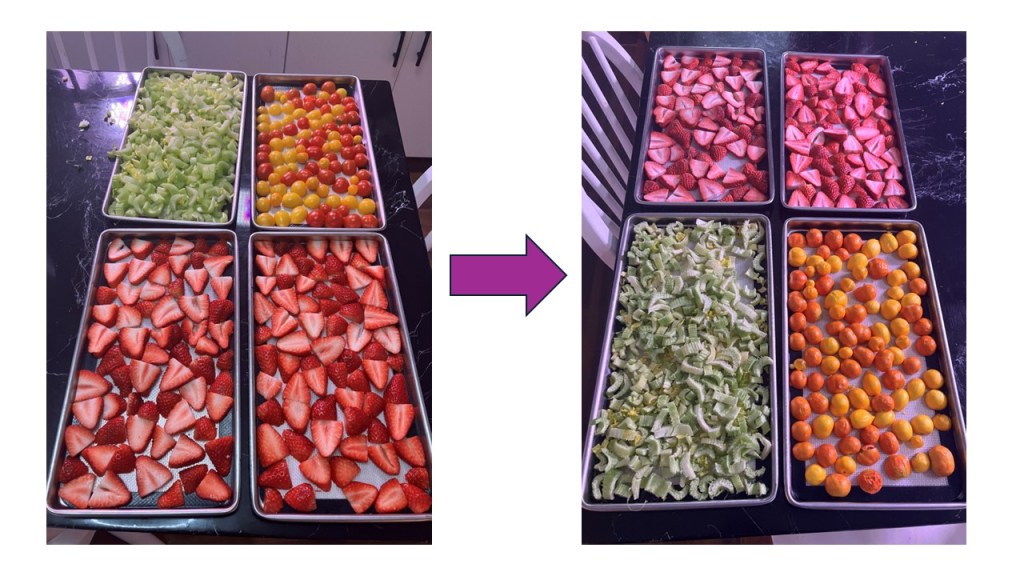
Yesterday, I prepped apples by peeling, coring, and slicing them, then soaking the slices in water with a bit of citric acid to preserve their color. With one tray still free, I added freshly washed and spun spinach, spreading it evenly across the surface. The apples turned out very tart, probably because of the citric acid, but they will still make tasty and healthy snacks as they are. I will need to experiment further with rehydrating them for cooking. So much still to learn …
Each batch feels like a small step toward greater self-sufficiency — preserving abundance now so it can nourish us later. I’m excited to see how freeze-drying fits into this suburban food forest experiment and how it helps stretch the harvest far beyond the growing season.
 Fifth Acre Food Forest
Leave a comment